When you need to deliver an effective sales or business presentation, it can be hard to make the content enticing and interesting for your audience. You want to make a great impression and ensure the information you provide is easy to understand and paints a clear picture. Easy, eh?
Well, when it comes to business information, it can be hard to make it spark interest and engage the audience. They can easily switch off and not retain what you say if it's not compelling or interesting. This means you need to work to ensure you tell a narrative with your data. You can do this with actions and results to make what you’re saying more interesting, persuasive and clear.

You want to tell a story that the audience will remember and relate to their own situation. In fact, there’s a common belief that people remember stories
22 times more easily than just remembering facts. So it’s worth creating a narrative that will be memorable about your business.
In this ZandaX article, we take a look at how to turn dry business information into a narrative.
Make Sure You Start With A Strong Beginning
Creating a better narrative starts at the very beginning of your presentation. You need to give the audience a clear insight into why you’re presenting the information, what you intend to do and what it means to them. In this way, you’ll be clear, interesting and engaging.
They need a good idea of the background to ensure it starts you off well from the beginning. If you just outline the information without any narrative, you’ll probably lose their interest and attention before you have even got started.
This also allows you to introduce the problem you’re discussing and why what you’re going to say will give an answer to their concerns. We have discussed elsewhere, you always need to
keep the end in mind.
Use an Engaging Slide Presentation
How you present information often makes the biggest difference when you need to showcase your material. The visuals are of high importance and can transform that otherwise dull facts into an interesting narrative, which will generate a follow-up or even close a deal.
A
pitch deck can make a difference with visuals that reveal a purpose, show the data in an appealing manner, and suggest why they need to invest, or join, your business. Think of it less as a slideshow and more as a visual argument — each slide earning its place by moving the story forward. The best presentations don't just display information; they guide the audience toward a conclusion they feel they've reached themselves.
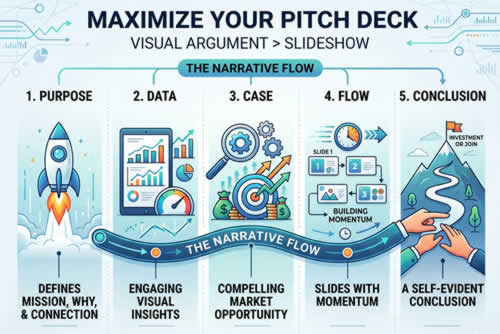
To help you, you can find
pitch deck templates that will help you plan out the pitch deck so it’s effective and sparks people’s interest. With pre-designed templates, you can present the content in a professional and enticing platform. The template will enable you to make a statement with the presentation, as they help you to showcase your vision to the intended audience.
You can then create a story that helps you to present the metrics interactively. You need clear, easily digestible data to display in your presentation. While metrics are an excellent tool to provide evidence and solutions. It's a good idea to display them so they relate to the initial narrative.
Keeping them simple and easy to understand is likely to lead to the information being better received.
Make the Information Relatable
Another way you can create a narrative that the audience will enjoy (and understand!) is to make it more relatable. You want to ensure it connects with the audience, explaining how the data has affected the company and customers. That’s because if they can relate to and empathise with the problem, and how you show how the problem was fixed, they are much more likely to connect. You want your presentation to be relevant in terms of their business and how it could help their company.

If you'd like to learn more about delivering presentations, why not take a look at how we can help?
Boost your presentation skills with our online courses.
RRP from $65 – limited time offer just
$23.99
As Forbes discusses, you need to get to the emotional aspect of the information to make it
emotive and relatable. Explain why the audience should care! Showing how it has provided a solution for your situation can provides a story that will engage and motivate them.
Be Authentic
The best way to make what you say more inspiring is to ensure you are authentic! Many people will switch off if the information is presented in a way that doesn’t come across as genuine. Your audience won’t be interested if what you say is misleading or maybe exaggerates the truth. Always be honest and real if you want to inspire people.
And use easy-to-understand language – without jargon – so you don’t make your information dull and hard to follow. You may be an expert – a guru – in your field, but you should always aim to highlight what may have gone wrong or the journey the business took. And, as we say, be honest about your history.
Provide a Strong Ending
Remember that a good ending is always necessary! You need to end as strongly as you started if you want to make a lasting impression.
Refer back to what you have said, and how the core message has been relayed. You can even summarise some of the key points you have covered, and what your audience can take away from the presentation. This will make it much easier for them to remember these important points – and how they affect them.
With an impactful closing to your presentation that completes the narrative, they will remember what you have shown them, and you will leave a lasting impression.

It’s often a good idea to
hand out the information you have presented, so they can look back at what you have discussed later down the line. (NOTE: don’t do it before or during the presentation or they’ll be reading it instead of listening to you!)
Make sure you provide a clear call to action and link it back to what you have said, so you create an engaging, compelling finish. With a call to action, they’ll then know what they should be doing.
And finally, if you want to maximize the effect of your presentation, always ask for questions so they can clarify any points they maybe don’t understand.
The Story Is the Strategy
A great business presentation isn't really about data, slides, or even structure – it’s about making people feel that what you're saying matters to them. When you connect facts to a story, you convert dry information into something your audience can actually act on.

So before your next presentation, ask yourself: what do I want people to walk away thinking, feeling, or doing? Answer that honestly, build your narrative around it, and you'll find that turning dull content into something inspiring isn't a creative gift – it’s actually a skill you really should develop.