Most kids without strong math foundations in middle school didn't suddenly hit a wall in sixth grade. The gap was already there years earlier, when a concept didn't click, and the class moved on anyway.
Additional uncertainty makes multiplication harder, weak multiplication makes fractions confusing, and by the time algebra arrives, the child is lost and convinced they simply are not a math person. In fact, almost one in five of the population carries significant math anxiety, and for most of them, it started in the early grades before anyone recognized it as a problem.

Parents and teachers can change that trajectory,
not by drilling harder or pushing formal instruction earlier, but by building genuine number sense in ways that feel natural to young children.
In this ZandaX article, we show how this process starts earlier than most people think … and it looks nothing like a classroom lesson!
Start Before the Workbook
Young children absorb math through everyday life long before they sit down with worksheets. Counting stairs, dividing snacks between siblings, measuring flour while baking, these are real mathematical situations that kids engage with naturally because nobody called it math. The goal at this stage isn’t to add structured lessons on top of daily life, but to recognize those moments and use them.
Some of the most effective early practice happens inside routines that already exist:. For example
- Count out loud during everyday tasks such as setting the table or unpacking groceries
- Ask comparison questions like which bag is heavier, which pile has more, or do we have enough for everyone
- Let kids measure ingredients when cooking and talk through what the numbers mean
- Play games that involve counting or numbers, such as Uno, Chutes and Ladders, or dominoes
Children who grow up with math woven into daily conversation arrive at formal instruction with a natural comfort around numbers that their peers often lack. That comfort is hard to teach later, but surprisingly easy to build early on.
Build Real Understanding Before Procedures
A big share of early math frustration comes from children being taught procedures before they understand what numbers actually mean. They memorize steps without grasping why those steps work, so when something slightly unfamiliar shows up, they freeze.
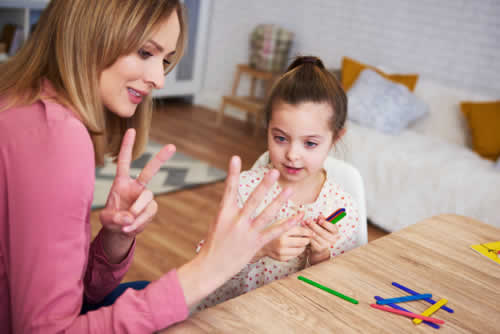
Physical objects matter more than worksheets at this stage. Blocks, coins, and fingers all do the job. A child who physically splits eight blocks into two groups of four understands something that a child who only memorized "8 divided by 2 equals 4" probably doesn’t, and that hands-on understanding is what makes a good
elementary math program stick when formal instruction begins.
The best programs move from physical objects to visual representations before jumping to abstract numbers. This builds each concept on the one before, it so gaps don't quietly accumulate over the years.
Word Problems Belong Early
Lots of children can solve a row of equations, but they fall apart the moment the same problem is wrapped in words. That gap shows up because word problems are often treated as advanced material rather than a natural part of learning from the start. In fact, introducing simple word problems early, before a child has any reason to fear them, keeps reading and reasoning connected to numbers in a way that pays off in later grades.

If you'd like to learn more about what we provide, why not take a look at how we can help?
Boost your skills with our market-leading online courses at super-low prices.
A child who regularly hears "we have 12 strawberries and five people, how do we share them?" is doing the same thinking that formal word problems will eventually require … just without the pressure of a test attached to it. This doesn’t need to feel formal. For example, a grocery trip can become a quick lesson about cost, quantity, and comparison.
Think of a walk around the neighborhood. And how it can turn into questions about distance, shapes, or patterns. When adults keep the tone light, children soon learn that word problems aren’t traps. They are just real life with numbers attached. That’s a much friendlier introduction than a worksheet full of tiny print and dramatic train schedules.
Keep the Emotional Environment Low Pressure
How adults talk about math around children matters more than most people realize. A parent who mentions they were never good at math, or a teacher who reacts with frustration when a student gets an answer wrong, plants a seed that grows into avoidance over time.
It’s also important to
praise effort rather than correct answers. This normalizes mistakes out loud, removing any stigma. Treating wrong answers as useful information rather than failures also contributes to forming a child who stays willing to try.

And that willingness is what keeps the door open through the harder material that lies ahead!
- Avoid saying things such as "I was never a math person" around young children
- When a child gets something wrong, ask them to walk you through their thinking rather than correcting immediately
- Celebrate persistence as much as correct answers, because persistence is what actually drives long-term progress
Practice Should Feel Like Practice, not Punishment
Short and frequent beats long and occasional at this age. Ten minutes of focused practice several times a week does more than an hour-long session on the weekend, which leaves everyone tired, frustrated and less willing to come back again.
Games, cooking, building projects, and real-world problem solving all count as practice. The more a child sees math as something that shows up naturally in life rather than something that only exists on a worksheet, the more their confidence grows alongside their actual skills. Strong math foundations grow best when practice feels predictable, brief, and useful. Children really don’t need a marathon! They need repeated chances to notice patterns, test ideas … make small mistakes and recover without embarrassment. That rhythm builds skill, stamina, and motivation.
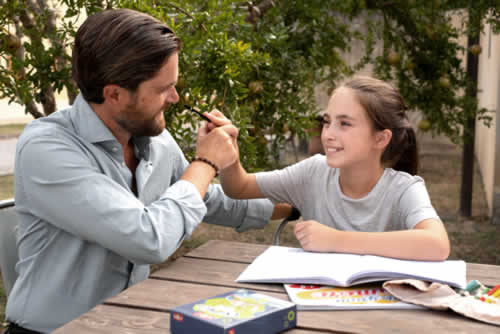
And it’s the inevitable combination of genuine ability paired with genuine confidence, is what carries a child through the harder years ahead without the anxiety that holds so many of them back.