There’s a persistent assumption in marketing that reach equals technology — that if you have a good website, some targeted ads, and a social media presence, customers will find you. That assumption works reasonably well in cities, where people are online constantly and delivery is fast. In rural markets, it falls apart almost immediately, and the businesses that do not realize this tend to waste a lot of time and money wondering why.

Agribusiness is a great lens for this problem, because the stakes are high and the customers are spread thin. A farm supply company, a seed distributor, or a rural equipment dealer is not selling to a dense neighborhood — they may be serving customers across thousands of square miles, many of them operating on tight margins, seasonal schedules, and well-established habits. Getting the marketing wrong is not just inefficient; it can mean entire regions go unserved.
Why Is Reaching Rural Customers Always a Challenge?
Remoteness Is the Starting Point
The obvious problem is distance. In the United States, some farming communities in the Midwest or Great Plains are hours from the nearest town with a meaningful retail presence. In Australia, the distances are even more dramatic — properties in Queensland or Western Australia can be genuinely isolated, with the nearest supplier a full day's drive away. Rural India, sub-Saharan Africa, and parts of South America present similar challenges, scaled up considerably.
Distance affects everything: delivery costs, the economics of having a local sales rep, the practicality of events or demonstrations, and even the basic awareness that a product or service exists. A business that relies on foot traffic, local advertising, or word-of-mouth in dense urban areas has to rethink every single one of those channels when the audience is spread across hundreds of miles.
Technology Gaps Still Matter
It is tempting to assume that smartphones and broadband have made geography irrelevant. They have not. Rural internet connectivity remains genuinely poor in many parts of the world, including wealthy ones. In the US, tens of millions of rural residents still lack access to reliable broadband. In developing agricultural regions, smartphone penetration exists, but data is expensive and connections are slow and inconsistent.
This means that a marketing strategy built around rich video content, complex websites, or data-heavy digital ads is going to underperform in rural markets, not because the audience is unsophisticated, but because the infrastructure simply is not there.
How Telephone Systems Can Help
One channel that is often underestimated is the telephone — specifically, toll-free and freephone numbers. Phone systems and services such as
Telcoworks 1800 numbers help businesses stay accessible. A farmer who has a question about a product, a concern about a delivery, or a need to reorder supplies is far more likely to pick up the phone than to navigate a website on a slow connection. And offering a free number removes a barrier that might seem trivial in an urban context but is genuinely meaningful in rural areas where call costs are sometimes still a consideration.

For agribusinesses in particular, a dedicated free number can serve as a sales line, a technical support channel, and a customer relationship tool all at once. The human contact that a phone call provides also builds the kind of trust that a webpage rarely can, especially with older farming communities that are simply more comfortable talking to a person.
Resistance to Change Is Real — and Rational
Rural markets often get described as resistant to change, and the implication is usually that this is a problem to overcome. A more useful framing is that rural customers have very good reasons to be cautious. If you run a farming operation and make a purchasing decision that does not work out, the consequences are not a minor inconvenience — they can affect an entire growing season or a significant capital investment. Caution is not stubbornness; it is often sound business judgment.
This means that marketing to rural customers requires a longer trust-building cycle than urban audiences typically expect. The pitch, the product, and the supplier all have to earn credibility before a decision is likely.
How Is Agribusiness Marketing Changing?
Building Relationships Through Local Networks
The most effective rural marketing rarely looks like marketing at all. It works through local networks — agricultural co-operatives, farm bureaus, regional associations, and the informal word-of-mouth that flows between farmers at seasonal events, auctions, and community gatherings. Agribusinesses that invest in these relationships, rather than bypassing them with digital campaigns, tend to see far better long-term results.
This might mean sponsoring a local field day, having a regional representative who genuinely knows the community, or building partnerships with trusted local retailers who already have the relationship that the brand is trying to establish.
Digital Marketing That Fits the Context
Digital marketing does have a role, but it needs to be scaled and targeted appropriately. Search engine optimization (SEO) matters — a farmer looking for "frost-resistant wheat varieties" or "irrigation equipment suppliers" is doing exactly the kind of high-intent search that a well-placed page can capture, even on a slow connection. Email remains highly effective in agricultural markets, particularly for seasonal promotions and product updates, because it does not require a live connection to read.
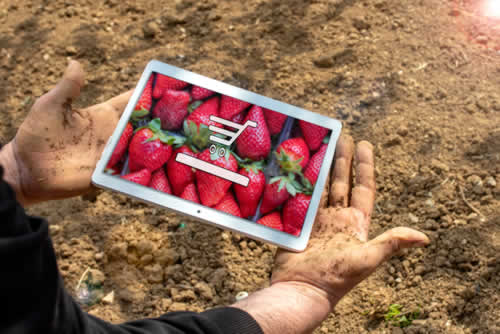
Paid advertising can work, but the targeting needs to reflect rural geography and interests rather than default urban audience settings. A broad national campaign that is not adjusted for rural demographics is often expensive and poorly matched to the audience.
Offline Advertising: Often Underestimated
Here is something that often surprises urban-focused marketing teams: in rural areas, traditional offline advertising is frequently both
cheaper and more effective than digital. Local newspapers, regional radio stations, and agricultural trade publications often have loyal, highly specific readerships that can be reached at a fraction of the cost of equivalent digital impressions. A well-placed ad in a regional farming magazine is not a nostalgia play — it is often a sharper investment than a digital campaign with far worse targeting.
Signage, direct mail, and point-of-sale materials at rural retailers and co-ops also continue to perform well in contexts where digital reach is limited.
Direct Sales and On-the-Ground Presence
For higher-value products and services, there is often no substitute for a physical presence. A regional sales representative who visits farms, attends local events, and is genuinely known in the community is an asset that no digital campaign can replicate. Consider a seed company whose representative has been visiting the same farms for five years, knows the soil types and the crop rotation patterns, and remembers what worked and what did not — that person is carrying a level of contextual knowledge and trust that closes sales that a website cannot.
The economics of field sales in rural markets are challenging, but the return on investment, when it is done well and sustained, is typically higher than businesses expect.
Data Analysis: Knowing Who You Are Actually Serving
Rural markets are not homogeneous. A grain farmer in Kansas, a livestock producer in rural Brazil, and a smallholder in rural Kenya have almost nothing in common beyond being categorized as "rural agricultural customers." Businesses that treat these audiences as a single segment will consistently misfire on messaging, timing, and channel selection.
Better use of data — purchase history, geographic clustering, crop type, operation size — allows agribusinesses to segment their audience meaningfully and tailor both the offer and the medium to the actual customer. This does not require sophisticated technology; it often requires little more than using existing customer records with some deliberate thought.
What Are the Common Mistakes With Targeting Rural Customers?
The most consistent mistake is assuming that what works in urban markets just needs to be delivered more broadly. Rural customers are not urban customers with more land — they have different decision-making timescales, different information sources, different priorities, and different levels of tolerance for things that go wrong. Marketing that ignores this produces campaigns that feel irrelevant at best and condescending at worst.
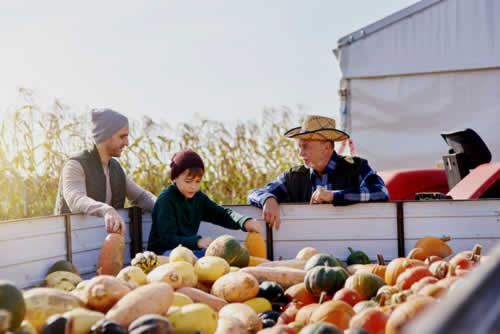
A second mistake is the "digital-only" default. Many marketing teams, particularly those based in cities, reach for digital tools as the automatic first choice, without asking whether those tools will actually reach the intended audience. In rural contexts, digital often needs to be one layer of a broader strategy, not the whole strategy.
A third is impatience. Rural trust takes time to build, and businesses that expect quick returns from rural marketing campaigns are usually disappointed. The payoff is real, but it arrives on a different schedule.
What of the Future?
Rural connectivity will improve, and that will gradually change the balance between digital and traditional channels. Satellite internet services are already extending broadband reach into areas that were previously unserved, and mobile technology continues to advance in developing markets. As these changes take hold, digital marketing will become a more reliable tool in rural contexts.
But the fundamentals — trust, relationships, local knowledge, and an honest understanding of who the customer is and how they make decisions — are not going away. The agribusinesses that are doing this well now are not waiting for technology to solve the problem. They are building the relationships and the presence that will matter regardless of how the channels evolve.
And that is probably the most useful thing any rural-market business can take from their example.

If you'd like to learn more about what we provide, why not take a look at how we can help?
Boost your skills with our market-leading online courses at super-low prices.