Remote work didn't just move the office to people’s homes; it quietly rewrote the rules of what it means to perform well. The old signals are gone: no one sees you arrive early, stay late, or look impressively busy at your desk. What remains is output, and the judgment behind it.
That shift has been more disruptive than most people expected. In a traditional office, competence is partly visible. You're seen solving problems, helping other people, even “working the room”. Remote work strips a whole lot of that away. What you deliver, and how reliably you deliver it, becomes, frankly, pretty well the whole story.
For employers, that's clarifying. But for employees, it can feel exposing - especially when, at the same time, even the work itself is changing. So much so that the skills that got you hired two years ago may have shofted too. In a remote environment, there's no casual Friday afternoon training session, no colleague leaning over to show you a shortcut. Frankly, you're largely on your own.

That's exactly why learning new skills is now so important for remote workers. Not because companies are demanding it loudly, but because the gap between those who keep developing themselves and those who don't is becoming harder to hide. The answer lies with platforms like
HelloLesson.com which make it easier for people to continuously upgrade their abilities in a flexible way.
When a remote employee learns a new skill or develops a new capability, they not only improve themselves but also improve the team's performance.
The Link Between Skills Growth And Remote Productivity
Today, the most important skill for a remote employee is to communicate clearly without face-to-face interaction and solve problems independently.
When people develop new abilities, whether technical, organizational, or communication-based, they become more confident, and this boosts their confidence. They are able to handle their task independently. When a person becomes more capable, they naturally get more engaged in their work. The progress helps them in reducing stress, and of course their productivity increases.
Research has shown that remote employees can be more productive with the right tools and flexibility. But this isn’t automatic; it depends on how the person themselves adapts and evolves their skill.
Better Adaptability In Fast-Changing Environments
As the work environment is undergoing rapid change, adaptability has become one of the most valuable traits that someone can possess, as new tools, platforms, and workflows appear all the time.
When anyone is engaged in learning, they develop a mindset that is open to new ideas and approaches. When new tools, processes, or expectations appear, they are not overwhelmed; instead, they are confident in exploring and mastering the new ideology.
Skill learning also strengthens their problem-solving ability. People who have critical thinking, approach problems from multiple angles, and find innovative solutions for the same. This will improve the employees and their team performance.

Adaptability reduces dependency on other peopl. They require less guidance from the managers, which is beneficial in remote work settings. These employees can adjust and manage their tasks while staying aligned with the organization's goals. Upskilling also helps them in staying relevant in a competitive environment.
Stronger Self-Management And Discipline
Stronger self-management and discipline are essential qualities in modern work culture, when independence is expected. Skill learning helps in developing these traits. When someone is engaged in learning new skills, they become more structured in how they approach their task. They learn how to break a complex project into manageable steps, which helps them complete the task in a given time.
Self-management also enhances accountability; the employee takes ownership of their work, monitors their progress, and addresses challenges actively.
Over time, self- management and disciple leads to:
- Few missed deadlines
- Better prioritization
- Increase accountability
In remote work settings where monitoring is challenging, these qualities become more valuable.
Improve Communication And Collaboration
The biggest challenge in a remote setup is communication. Anyone who has developed communication skills - such as active listening, clear writing, and effective presentation- is better able to express ideas, share feedback, express ideas and understand others better. This reduces misunderstanding and ensures that tasks are completed more efficiently.
Learning interpersonal skills plays a major role in collaboration. Employees who understand team dynamics, conflict resolution, and emotional intelligence can work more harmoniously with others. As communication improves, teams can share knowledge freely, solve problems faster, and support each other more effectively.
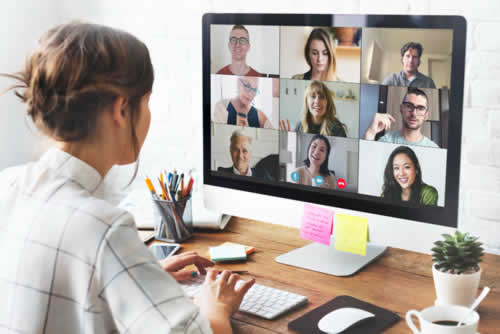
To improve communication and collaboration, you can learn skills such as:
- Asynchronous communication
- Clear writing
- Virtual collaboration tools
Communication and trust are key challenges in a remote setup, which can directly impact individual and team performance.
High Confidence And Problem-Solving Ability
When anyone learns new skills, they gain a deeper understanding of their work. This knowledge builds the confidence needed to take initiatives and handle responsibilities independently. Employees approach challenges with a positive mindset rather than hesitation. Instead of avoiding complex tasks, they are more willing to engage, experiment, and find solutions.
At the same time, skills development
sharpens problem-solving ability. People can identify the problem and apply logical thinking to arrive at a practical solution. This clearly speeds up decision-making.
These qualities are important for remote workers as:
- Immediate help is not available
- Quick decisions are often required
- Ownership of the tasks is high
Greater Career Growth And Better Performance
When people see a clear path forward, they naturally perform well. Skill development plays an important role in the professional development of an employee within an organization.
When an individual believes that their efforts contribute to a long-term career, they automatically become focused and committed to their work. They are not just completing the task or project, but they are building their future. This mindset encourages them in the following ways:
- Maintain a high standard
- Meeting the deadlines
- Deliver quality results
Career growth increases accountability. People who aim for promotion and new roles tend to take responsibility for their work, seek feedback, and contribute to the organization through their ideas, In this way, they actively support the team and the organization.

Your Competitive Edge in a Global Workforce
Individuals who are consistently upgrading their skills are in a better position at a global level. Skill learning allows employees to stay relevant while the industries evolve. Mastering new technology, improving communication, and understanding global work practices make professionals more valuable and adaptable.
A strong skill set increases versatility. People who can handle multiple roles are more attractive in a competitive environment. It not only provides job security but also opens the door to international opportunities. Learning has become a necessity.
Increased Engagement and Motivation
Remote work can sometimes feel isolating or repetitive. Increasing engagement and motivation are important for continuous skill development. Learning new things brings:
- A sense of progress
- More enthusiastic
- Commitments towards goal achievement
- Prevents monotony
- Mental stimulation
- New motivation
Learning new skills will lead to higher productivity, improve job satisfaction, and a stronger and more committed workforce.
Conclusion
Learn,
adapt, and
grow continuously are the three rules for remote work. Here, it is not the most experienced one that performs better- it is the one that keeps evolving. In a world where desk work is no longer a necessity, skill growth is a true driver of productivity.

If you'd like to learn more about what we provide, why not take a look at how we can help?
Boost your skills with our market-leading online courses at super-low prices.