Every afternoon, a sales manager (we’ll call her Priya) puts on noise-canceling headphones just to finish an email. The floor is hard laminate, so every footstep, chair scrape and dropped bag echoes across the open-plan office. Nobody has ever mentioned “the floor” as a problem. Yet it quietly shapes how well her whole team works, every single day.
That’s the real – and hidden – cost of an office floor that needs a refit. Worn carpet, echoing hard surfaces and tired, stained tiles rarely appear on anyone’s budget or risk register. They simply fade into the background. But the problem shows up elsewhere, in broken concentration and more mistakes. There’s also a quiet sense that nobody really looks after the place anymore.
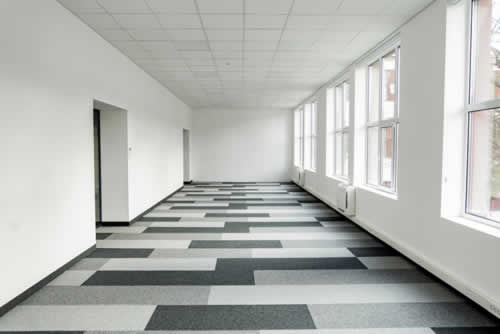
But it’s not all bad news, is it? Because the reverse is also true. When businesses invest in office floor refits, staff often notice the difference in
focus and mood just as much as the new look.
In this ZandaX article, we explain why flooring deserves a place in your planning. And we also look at what you are really paying for by leaving it alone.
The Problem Nobody Put on the Agenda
Let’s look at an illustration involving a small training consultancy. The team worked out of a converted townhouse on the edge of town, and on paper the space was perfect. It had natural light, a well-equipped kitchen, and a quiet street outside. Yet something kept grinding people down. Meetings felt a bit tense; calls sounded hollow; colleagues retreated behind headphones and stopped chatting between tasks.
When Suzi, the founder, finally asked the team what bothered them most, the answer surprised everyone.
It was the floor!
Half the building had old ceramic tiles. The other half had tired carpet that had seen better days – long ago. The tiles bounced the sound of every footstep and chair scrape around the room. The carpet had a curling edge by the stairs that everyone stepped over without thinking. None of this seemed urgent, or especially urgent. But both were quietly costly.
Noise is easy to underestimate because people adapt to it. Researchers at
Cornell University found that workers exposed to low-level office noise showed higher levels of a stress hormone. They also made 40 percent fewer attempts at a challenging puzzle than workers in quiet conditions. Most of them didn’t even report feeling more stressed.

That matched what the team described. Nobody complained about the noise directly. They just felt tired, distracted, and even a bit short-tempered by mid-afternoon. And of course the curling carpet edge carried its own risk. In Great Britain for example, the
Health and Safety Executive reports that slips, trips and falls on the same level caused 30 percent of non-fatal workplace injuries in 2024/25. One small fold in a carpet can become a serious problem very quickly!
Planning the Flooring Installation Around the Working Week
Taking our illustration forward, Suzi treated the project like a home renovation rather than a commercial fit-out. And that decision shaped everything that followed … in a good way.
She wanted to avoid losing a full week of work to showroom trips and contractor queues. So she booked 50Floor, a residential firm that handles flooring installation in Dallas and offers
sample appointments at the customer's own address. They arrived with a car full of options, measured every room, and talked through how each material would cope with the local clay soil and humidity swings.
The team chose luxury vinyl plank for the main working areas and kitchen. It looked like warm timber, it handled spills, and stayed quiet underfoot. They kept carpet in the small meeting room to soften sound during client calls.
The installers worked through the rooms in short stages. Staff moved into the kitchen and meeting room on the busiest day and worked from home the next. The disruption lasted far less time than anyone expected.
Five Lessons the Team Took Away
The new floors looked better, of course. But the more interesting changes happened in how people worked and spoke to each other.
Lesson 1: Noise Is a Communication Problem
Once the echo disappeared, conversations returned. People stopped wearing headphones as a default. Quick questions across the room replaced long chains of instant messages.
Team meetings actually ran shorter. Nobody had to repeat themselves, and fewer misunderstandings crept into decisions.
Lesson 2: Ask the People Who Use the Space
The real breakthrough came from a simple question in a team meeting. Until then, everyone had assumed someone else had raised the issue.
Good workplace communication includes the physical environment. Asking colleagues what makes their day harder often uncovers problems managers never notice from their own desk.
Managers now ask one “work environment” question in every quarterly check-in. It takes a minute, and will flag minor issues like broken blinds or draughty corners before they become more of a problem.

Lesson 3: Plan for Fresh Air After the Work
New materials can release chemicals into the air for a while after installation. According to the Environmental Protection Agency, levels of many volatile organic compounds run 2 to 5 times higher indoors than outdoors in homes.
People can open windows, run the air conditioning on fresh-air settings, and choose low-emission products where possible. These cost nothing extra and show staff that their comfort matters.
Lesson 4: How a Room Feels Shapes How People Feel
A
warmer, cleaner floor will change the mood of the whole building. It will feel less like a tired rental and more like a place people choose to be.
That effect has a research basis. A 2014 study led by Cardiff and Exeter researchers found that adding plants to offices raised productivity by 15 percent. Their point was simple: enriched spaces engage people more than bare, minimal ones.
Lesson 5: Small Physical Fixes Support Stress Management
Stress management often focuses on mindset, breathing, and boundaries. And of course, these matter. But the environment does a lot of quiet work as well. Removing a daily irritation, like constant echo or a trip hazard, lowers the background stress people carry, and nobody has to spend energy coping with it anymore.
Leaders who take stress seriously should treat the workplace itself as part of the solution. A calmer room won’t fix a toxic culture, but a harsh one can make a good culture feel harder than it is.

If you'd like to learn more about managing staff, why not take a look at how we can help?
Boost your team management skills with our online courses.
RRP from $33 – limited time offer just
$14.99
How to Apply This to Your Own Workspace
You don’t need to replace every floor to benefit from these lessons! But you can start by looking at your space through your colleagues' eyes.
A few questions will also help:
- Where do people struggle to hear each other?
- Which spots feel cold, harsh, or uninviting?
- Are there any loose edges, cracked tiles, or worn patches?
- What do people avoid, work around, or complain about quietly?
Then decide which problems you can fix quickly and which need a bigger project. Even a rug in the right place can change how a room sounds and feels.
Start With What’s Under Your Feet!
In our example, the team set out to replace some tired flooring. They ended up with better conversations, calmer afternoons, and a workplace people actually enjoy. And this lesson reaches well beyond floors: when people struggle at work, the cause isn’t always a person or a process. Sometimes it is the room itself.
So ask the question this team almost never ask. What in our space makes the day harder? The answer might be right beneath you!