From construction and agriculture to logistics and even media content, the use of drones for business is skyrocketing. These clever machines can quickly and safely collate information, scout locations and provide camera and video footage however, take note, drones are not toys, boys and girls...
While the use of this tech has many benefits, it can bring your business crashing down to earth if not used correctly. Because of this,
staff training and development is of paramount importance if you want to avoid accidents, hefty fines, not to mention damage to your drone.
 In this ZandaX article, we’re going to dive into how to train employees to operate drones safely for business.
Understanding Regulatory Requirements
Without regulation, drone use would become the wild wild west of the skies and so aviation authorities in most countries have their own set of rules and regulations - including, in some cases, required licenses and / or certificates. Before allowing your employees to even take the tech out of the box, it’s essential that you have a plan in place to educate them on regulatory stuff like airspace classifications, restrictions, altitude limits and more.
Privacy laws and data protection standards also need to be observed. Employees need to learn how to manage information responsibly, especially when working in personal places. Having a clear understanding of the regulations will help to avoid fines and enable
drone services to be delivered in a legal – and ethical – manner.
Building the Basic Knowledge
It should go without saying (but we’ll say it anyway), that your staff need to learn to walk before they can run - or, rather, before they can fly. This means starting with the basic mechanisms of flight - lift, thrust, drag and weight. While this may not be the fun part of drone use, it helps employees to understand how the thing works as well as the impact of weather and environmental conditions. This basic training should take in a soup to nuts knowledge of the equipment including batteries, controllers, GPS, propellers and sensors as, without this information, it becomes extremely difficult to spot - and therefore - tackle malfunctions and issues.
Conducting Structured Ground Training
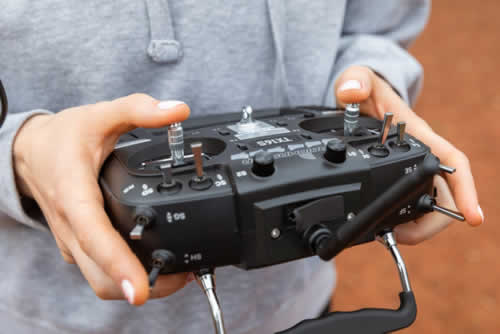
So, you’ve got the fundamentals, it’s time to get out there and start flying, right? Not so fast - Sitting in a classroom learning about drones is very different to actually flying one so, your next step should be pre-flight training. This is all about getting staff used to performing checks like emergency procedures and safety protocols along with risk assessments as this should be an ingrained step before each and every flight. Here, simulations are a great - and safe - way of introducing trainees to drone flight without risking damage to the equipment and, more importantly, to themselves or others.
Using Supervised Flight Practice
By this point, your trainees will no doubt be raring to take to the skies and so the next logical step is supervised flight training in the field. As you’re dealing with newbies, you should endeavour to find a wide open space away from buildings, members of the public and airports or airfields. You should also invest in the services of an experienced and professional instructor to ensure that ground training is safe and that employees have mastered each step before progressing onto the next.
Establishing Safety Protocols
When it comes to safety,
nothing should be ambiguous or open to interpretation, so putting proper safety protocols for pre, mid and post flight in place is the only way forward. Implementing such protocols instills in your staff a sense of responsibility and ownership as well as a deeper understanding of propellers, batteries, weather conditions and firmware updates. It’s also a really good idea to make emergency drills an integral part of your training through the use of simulations to help minimise accidents and damage.
Building Awareness of Risk Management
When you’re piloting an airborne piece of tech there is always an element of risk - but proper management is key to averting a crisis. Staff should be taught to weigh up risk for every flight, and document things like maintenance, weather conditions, objectives and incidents. When employees are aware of the risks involved, they are better equipped to make informed decisions and prevent problems. This includes common sense training - for example; you’ve planned a project in a field which is now being used for an arts fair - the sensible thing to do would be to reschedule.
Encouraging Continuous Skill Development
Of course, we shouldn’t need to tell you that training and development is never a one time thing. Technology rarely stands still, so it’s important to ensure that training is regular and fluid to ensure that operators are always abreast with changes in software, industry standards and regulations. Don’t worry, this doesn’t have to mean huge chunks of time or money - quick refresher courses and workshops can be really effective for keeping everyone up to date and, where necessary, certified.

If you'd like to learn more about what we provide, why not take a look at how we can help?
Boost your skills with our market-leading online courses at super-low prices.
Integrating Training into Business Operations
ZandaX are specialists in training, so we can confidently say that the main thing about training is that it needs to be relevant! For you and your team, this means designing training modules that keep your business front and centre. For example; if you’re a construction company, you’ll want your training to involve things like site surveys and mapping. When training is relevant to the business, the employee is more likely to build a comprehensive understanding of the operational objectives as well as the performance and safety standards required.
Promoting a Safety Culture
The last thing your business needs is to be faced with legal action because property - or worse, a person - has been damaged by your drone. By encouraging staff to take ownership and report any hazards, near misses or problems with the equipment, you start to develop a culture of safety and self-improvement which is fully integral, rather than an afterthought.
Measuring Effectiveness
As with any kind of investment, you need to know how it’s doing and this is done by constantly evaluating your training programs and encouraging feedback from trainees. This not only helps you to keep on top of your training game but also offers some really valuable insights which might otherwise be missed.

Conclusion
There’s pretty well no doubt that drones will play a major part in the future of business. And they will save companies a huge amount of time and effort - as long as they’re used properly. This means that when you put policies and procedures in place – and invest in staff training and development – you’ll get the most out of these valuable tools. And you’ll keep everyone safe, too!